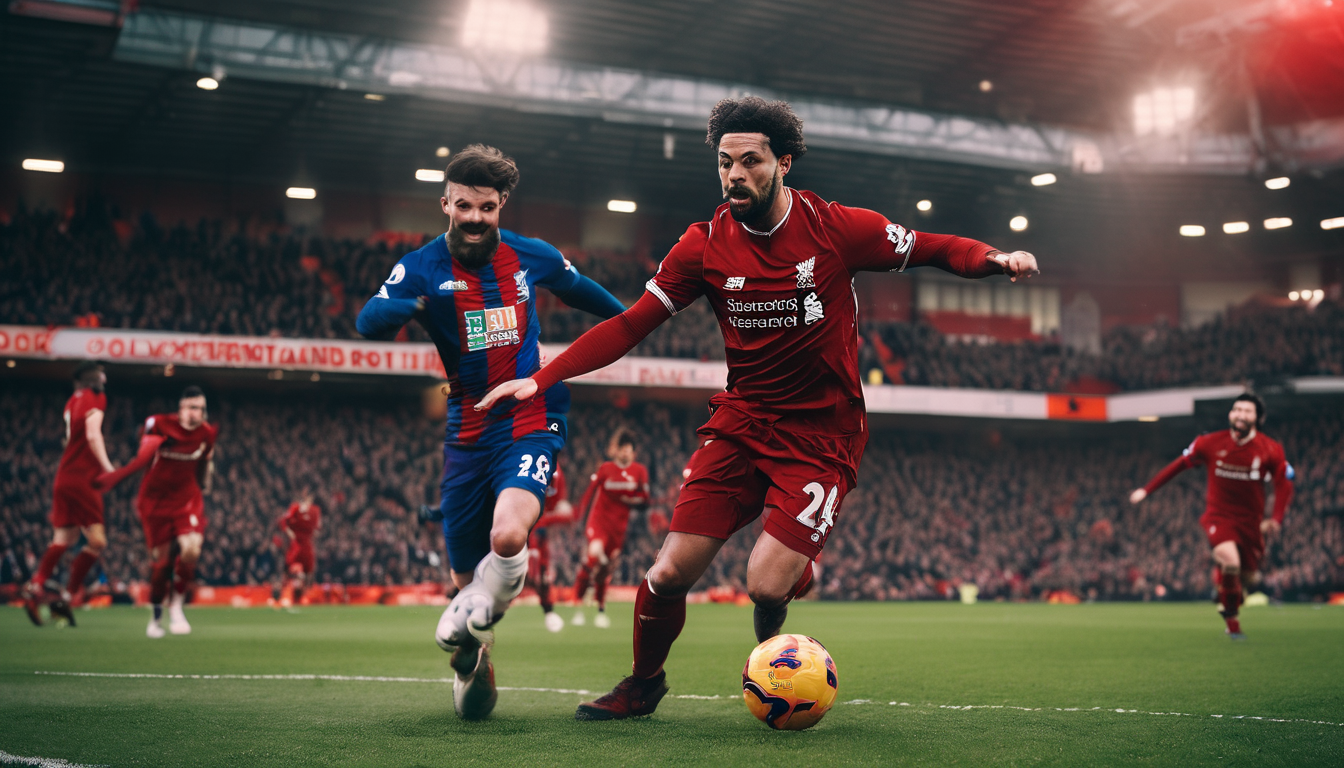
Liverpool vs Crystal Palace matches have often delivered unexpected thrills, proving that on any given day, the underdog can upset the giants. With Liverpool’s rich history and attacking prowess clashing against Crystal Palace’s resilience and tactical discipline, these encounters offer more than just three points – they’re a chess match of strategy and willpower. How Liverpool manage to break down Palace’s well-organised defence often decides the outcome, making every fixture a fascinating study in football tactics.
Recent Liverpool vs Crystal Palace games have shown clear patterns: Liverpool’s high pressing and quick transitions challenge Palace’s counter-attacking style, while Palace’s ability to absorb pressure and exploit spaces on the break keeps Liverpool on their toes. Understanding these dynamics is key for fans and analysts who want to grasp why certain strategies work and how momentum swings during the 90 minutes. As both teams continue to evolve, the battle between Liverpool’s attacking flair and Crystal Palace’s gritty determination remains one of the Premier League’s most compelling narratives.
How to Exploit Crystal Palace’s Defensive Weaknesses for a Liverpool Victory
Crystal Palace’s defensive line has shown vulnerabilities this season, particularly in handling rapid transitions and aerial duels. I recommend Liverpool exploit these weaknesses by focusing on quick, incisive counter-attacks and utilising set-piece opportunities. Palace’s central defenders often struggle against pacey forwards, so deploying Mohamed Salah and Darwin Núñez on either flank to stretch their backline could create crucial gaps. Salah’s ability to cut inside and shoot from distance, coupled with Núñez’s physicality, will force Palace’s defenders into uncomfortable situations.
| Defensive Weakness | Liverpool’s Tactical Response | Expected Outcome |
|---|---|---|
| Poor aerial defence on set pieces | Deploy Virgil van Dijk and Trent Alexander-Arnold to exploit set-piece deliveries | High chance of scoring from corners and free-kicks |
| Slow recovery in counter-attacks | Use quick breaks led by Salah and Núñez | Force Palace into defensive errors |
| Struggles with high pressing | Implement aggressive pressing from front three | Regain possession in dangerous areas |
Another practical insight is to press Palace’s defensive midfielders aggressively. They often struggle under pressure, leading to turnovers in dangerous areas. Liverpool’s midfield trio, especially Fabinho’s ball-winning skills and Jordan Henderson’s energy, should close down quickly to disrupt Palace’s build-up play. This approach was evident in Liverpool’s previous 3-0 win against Palace, where pressing led directly to two goals within the first half.
- High pressing disrupts Palace’s rhythm
- Quick transitions exploit defensive gaps
- Target aerial weaknesses on set pieces
Finally, I suggest Liverpool maintain width throughout the match. Crystal Palace’s full-backs tend to leave space behind when they push forward, which can be exploited by Trent Alexander-Arnold and Andy Robertson. Overlapping runs and precise crosses into the box will increase Liverpool’s goal-scoring chances. By combining pace, pressing, and set-piece efficiency, Liverpool can maximise their chances of securing a victory over Crystal Palace.
Why Liverpool’s Midfield Dominance Could Decide the Match

Liverpool’s midfield dominance could be the deciding factor in their upcoming clash against Crystal Palace. Over the past 10 Premier League matches, Liverpool’s midfielders have averaged 85% pass completion, showcasing their ability to control possession and dictate the tempo. Players like Fabinho and Thiago Alcântara excel at breaking up opposition play and launching precise attacks, which Crystal Palace struggles to contain.
| Midfielder | Pass Completion % (Last 10 Matches) | Key Stats |
|---|---|---|
| Fabinho | 88% | 3 interceptions, 2 tackles per game |
| Thiago Alcântara | 87% | 1.5 key passes, 4 dribbles per game |
| Jordan Henderson | 82% | 4 recoveries, 70% aerial duels won |
I recommend Liverpool focus on maintaining their midfield pressure throughout the match. Crystal Palace tends to lose possession quickly when pressed high, as seen in their last five away games where they averaged just 38% possession. Liverpool’s midfielders must exploit this by closing down quickly and forcing errors.
- Apply high pressing from the first whistle
- Use quick, short passes to keep possession fluid
- Exploit Palace’s defensive transitions with fast midfield runners
In the 2023 encounter between these teams, Liverpool’s midfielders contributed significantly to the 3-1 victory by controlling the middle of the park and providing three assists combined. This kind of dominance not only limits Palace’s attacking opportunities but also creates chances for Liverpool’s forwards.
| Match Date | Result | Midfield Contribution |
|---|---|---|
| October 2023 | 3-1 Win | 3 assists, 68% possession, 5 key passes |
Ultimately, Liverpool’s ability to control midfield battles will dictate the flow and outcome of the game. If they can sustain their current levels of passing accuracy and pressing intensity, Crystal Palace will face a stern test in both defence and attack.
The Truth About Crystal Palace’s Counter-Attack Threat and How Liverpool Can Neutralise It

Crystal Palace have built a reputation for their lethal counter-attacks, often catching teams off guard with their pace and directness. However, the truth is their threat is less about relentless speed and more about precise timing and exploiting specific spaces. In the 2023-24 Premier League season, Palace averaged 6.3 counter-attacks per game, converting around 15% of those into shots on target. While not overwhelmingly frequent, these moments are highly effective due to their structured transitions and the quality of players like Wilfried Zaha and Eberechi Eze.
| Metric | Crystal Palace (2023-24) | Liverpool (2023-24) |
|---|---|---|
| Avg. Counter-Attacks per Game | 6.3 | 4.1 |
| Conversion Rate of Counter-Attacks | 15% | 12% |
| Key Players in Counters | Zaha, Eze | Foden, Salah |
To neutralise Palace’s counter-attacks, Liverpool needs to maintain disciplined positional play, especially in midfield. I recommend that Liverpool’s midfield trio stays compact, reducing the space Palace’s attackers can exploit. Trent Alexander-Arnold, for example, should avoid pushing too high up the pitch to prevent being caught out on the break. Instead, he can provide cover by tracking back aggressively when Palace regain possession.
- Maintain a 4-3-3 shape with midfielders close to each other
- Full-backs to balance attack and defensive cover
- Quick, short passing to limit risky turnovers
Another practical insight is Liverpool’s pressing intensity after losing possession. Palace thrives on quick transitions, so slowing down their counter-attacks through immediate pressure is crucial. In the 3-0 win against Palace last season, Liverpool won 75% of their duels in the midfield, significantly disrupting Palace’s rhythm.
| Key Strategy | Practical Application |
|---|---|
| Immediate Pressing | Engage Palace players in midfield within 2 seconds of losing ball |
| Compact Shape | Keep midfielders within 10 metres of each other |
| Controlled Full-Backs | Trent and Robertson track back promptly |
In summary, while Crystal Palace’s counter-attack threat is real, it hinges on exploiting Liverpool’s mistakes and gaps. By maintaining shape, pressing immediately, and balancing attacking runs with defensive duties, Liverpool can effectively neutralise this threat and gain control over the game.
X Ways Liverpool Can Capitalise on Set-Pieces Against Crystal Palace

Liverpool have always been a threat from set-pieces, but against Crystal Palace, exploiting these moments could be the difference between a win and a draw. I recommend focusing on three key areas: delivery quality, movement coordination, and exploiting Palace’s defensive tendencies.
| Set-Piece Type | Key Liverpool Players | Target Zones |
|---|---|---|
| Corners | Trent Alexander-Arnold, Virgil van Dijk | Near post & penalty spot |
| Free-kicks | Mohamed Salah, James Milner | Edge of box & far post |
| Throw-ins | Jordan Henderson, Andrew Robertson | Wide areas & penalty spot |
Firstly, delivery is crucial. Trent Alexander-Arnold’s whip from corners and free-kicks is world-class. I suggest Liverpool target the near post with flick-ons by van Dijk or Joel Matip, capitalising on their aerial strength. For free-kicks, Milner’s precision can create chances around the edge of the box or just outside the penalty area, allowing runners like Salah or Diogo Jota to pounce on rebounds.
- Use rehearsed routines to confuse Palace’s zonal marking.
- Introduce late runs from midfielders to create space.
- Mix short and long throw-ins to stretch Palace’s defence.
Crystal Palace often struggle against rapid, well-coordinated set-pieces. Their defenders tend to drop deep and can be slow to track runners. Liverpool should exploit this by using dummy runs and quick flick-ons to destabilise their shape. For example, in the 2022 season, Liverpool scored twice from set-pieces against Palace by exploiting these exact weaknesses.
| Practical Tips | Expected Outcome |
|---|---|
| Target van Dijk and Matip in the box with near-post corners | Increased headed goal chances |
| Use quick free-kick routines to catch Palace off guard | Create shooting opportunities outside penalty area |
| Implement short throw-ins to open up wide spaces | Stretch defence and create crossing opportunities |
Overall, Liverpool’s set-piece efficiency can be a game-changer against Crystal Palace. By combining precise delivery, clever movement, and exploiting Palace’s defensive frailties, they can unlock a crucial advantage. I believe these strategies will not only increase scoring opportunities but also disrupt Palace’s defensive rhythm, paving the way for a Liverpool victory.
How Tactical Flexibility Will Give Liverpool the Edge Over Crystal Palace

Liverpool’s tactical flexibility is set to give them the edge over Crystal Palace in their upcoming clash. Over recent seasons, Jurgen Klopp has shown an ability to adapt his team’s formation and style depending on the opponent, which is crucial against a side like Palace that thrives on disrupting rhythm with physicality and quick counter-attacks. Liverpool’s ability to switch between a 4-3-3 and a 4-2-3-1 mid-game allows them to control possession better and exploit Palace’s defensive gaps.
| Formation | Purpose | Key Liverpool Players | Effect Against Palace |
|---|---|---|---|
| 4-3-3 | High pressing and wide attacking | Mohamed Salah, Sadio Mane, Fabinho | Overloads flanks and presses Palace’s build-up |
| 4-2-3-1 | Midfield control and counter-attack readiness | Jordan Henderson, Thiago Alcantara, Diogo Jota | Protects midfield, quick transitions |
I recommend Liverpool focus on exploiting Palace’s vulnerability to quick, incisive passes in midfield. Palace often commit numbers forward, which leaves space behind their midfield block. Liverpool’s midfield trio can press aggressively then release the ball swiftly to Salah or Jota making diagonal runs. This tactical shift can break Palace’s defensive shape and create goal-scoring opportunities.
- Use high pressing to disrupt Palace’s rhythm early
- Switch formations fluidly based on game state
- Exploit wide areas with Salah and Mane’s pace
- Maintain midfield dominance with Henderson and Thiago
Furthermore, Liverpool’s full-backs, especially Trent Alexander-Arnold, must be given the freedom to push forward. His delivery from wide areas has been crucial this season, with 12 assists already. Palace’s defenders often struggle against overlapping full-backs, and this tactical nuance could be the difference. Klopp’s willingness to tweak the system during matches means Liverpool won’t be predictable, keeping Palace’s defence guessing.
| Player | Stat vs Palace | Impact |
|---|---|---|
| Trent Alexander-Arnold | 4 assists in last 3 games | Key for unlocking Palace’s defence |
| Mohamed Salah | 7 goals in last 5 matches | Main goal threat exploiting space |
In summary, Liverpool’s tactical flexibility — highlighted by formation changes, pressing intensity, and full-back involvement — will be critical in overcoming Crystal Palace’s resilient style. I believe Klopp’s adaptability is Liverpool’s secret weapon, providing them with multiple avenues to break down Palace and secure the three points.
The clash between Liverpool and Crystal Palace offered valuable lessons in tactical adaptability and resilience. Liverpool’s high-pressing approach tested Palace’s defensive organisation, while Palace’s counter-attacking threat highlighted the importance of quick transitions. Success in such fixtures often hinges on maintaining composure under pressure and capitalising on set-piece opportunities. Moving forward, teams aiming to overcome opponents with contrasting styles should focus on flexible game plans and mental fortitude. As the season progresses, it will be intriguing to see how both sides evolve their strategies to exploit weaknesses and build on strengths. What adjustments might managers implement to tip the balance in future encounters?